


Welte: Driveshafts in electric vehicles: new requirements for power transmission
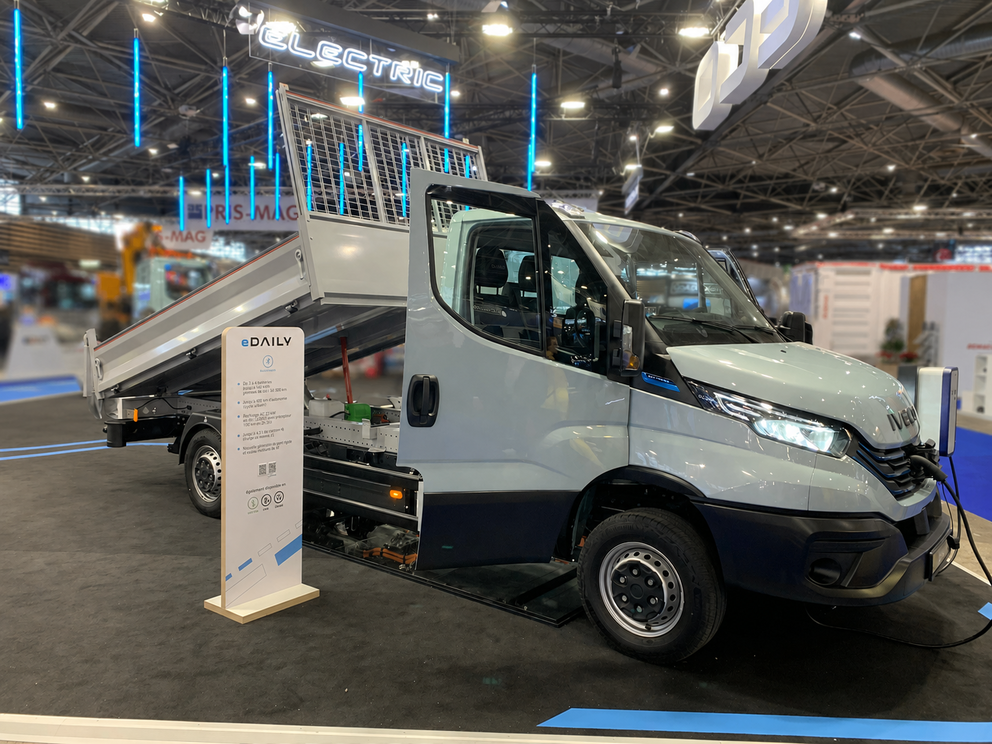
EU regulations require a 43% reduction in CO₂ emissions from heavy commercial vehicles by 2030 compared to 2019. As a result, new registrations of battery-electric or hydrogen-powered trucks and buses are on the rise. In the truck segment, the shares are still modest: in the last quarter of 2025, only four percent of heavy commercial vehicles newly registered in Germany had an electric drivetrain. However, looking at the city bus segment alone, the picture is different: an ACEA production analysis shows that in 2024, major European manufacturers had a 45% share of electric buses among low-floor compact and low-floor articulated buses. At the same time, OEMs are continuing to develop conventional drivetrains to optimise shift points and torque management depending on weight, topography, and driving profile.
In the components sector, manufacturers and suppliers are continually working on adaptations that are transferred to the spare parts market at an early stage. The Welte Group, as an aftersales specialist, aligns itself with OEM specifications according to its own statements. “We always follow the series,” says Robert Sanchez, Technical Director of the Welte Group. The aim is rapid availability of new variants when models change. “We want to stay at the pulse, find out what is being newly developed, and incorporate it into our portfolio early.”
The Welte Group has specialised in drivetrain technology for driveshafts and operates 16 locations in seven countries. At its main site in Neu-Ulm, over 20,000 different individual components and more than 5,000 ready-to-install driveshafts are held in stock. As the components often weigh 50 kilograms or more and can measure several metres from output to input flange including additional components such as centre bearings and universal joints, logistics are quite demanding.
Aftermarket specialists like Welte distribute components of the driveshaft brands EDS and EDS PLUS, among other things through re-engineering, and manage to overcome the vulnerabilities of series production parts. In electromobile applications, the components face particular challenges: high instantaneous torques and the additional weight from traction batteries place a strain on power transmission. “With a combustion engine, I get my torque through the gearbox shift stages. With an electric motor, the torque arrives at the shaft immediately, depending on the wiring and whatever gearbox was co-developed. That poses a problem, because many shafts are not designed for that,” says Sanchez.
Fewer parts, but the driveshaft is here to stay
With the elimination of the combustion engine and multi-speed transmission, the transition to electromobility means numerous components are no longer needed. According to industry figures, the number of parts decreases by a factor of seven. Components that are no longer required include the camshaft, pistons, clutch, turbocharger, fuel tank, and exhaust system, among others. At the same time, components such as gearboxes, driveshafts, and differentials are changing in design and function. Even the electrically driven software-defined vehicle in the heavy-duty segment still requires powerful components – and so the driveshaft is far from obsolete.
“In the area of electromobility, we see a wide range of concepts from commercial vehicle manufacturers. The decisive factor for us as an aftermarket supplier is which concept the respective manufacturer is pursuing: does it rely on a driveshaft, and where does it place its gearbox? With electric drives, this is handled much more flexibly,” says Sanchez. Some applications can do without a driveshaft altogether, because axle-mounted units or even wheel hub motors are used, the expert explains. Sanchez has worked with and for the component for almost his entire career, first only in an industrial context and, for several years now at Welte, also in mobile applications. He explains that even vehicles with an electric drivetrain without a driveshaft mostly still rely on the component for auxiliary power take-offs. This means that vacuum trucks, sweepers, silo vehicles, and similar municipal vehicles also require driveshafts to transmit power to pumps and other attachments.
Greater load – more compact design
In electric trucks and e-buses, torque peaks act more directly on the driveshafts, as the buffer of a clutch is absent. Power transmission occurs without shift interruptions, at higher torques, and often with greater vehicle weight. In addition, negative torques from energy recuperation during braking also place a load on the components. These conditions increase the demands on the driveshaft.
And customers are becoming more demanding too: efficient and fault-free power transmission makes a positive contribution to reducing the total cost of ownership, thereby dampening operating costs in the interest of freight operators and transport companies. “We meet these expectations by maintaining a rich product range and meeting the requirements of different customer groups. We always have to offer the right product for the right purpose,” says Sanchez.
For a longer service life, more robust designs and more stable product configurations are therefore required. Component specialists point out that driveshafts continue to transmit high forces due to their design, thus contributing to the efficiency and longevity of the electric drivetrain. The Welte Group emphasises performance, quality, high operational readiness, and comprehensive customer support. One indication of this is the individual solution approach that makes the collaboration special. As an example, the company cites vehicle manufacturers newly entering the European market. In these cases, the driveshafts are partly manufactured to different standards and do not last as long. Welte’s ambition: they must give the customer from the freight or public transport sector something better. If, in addition, no electronic parts catalogue (EPC) is available and part numbers cannot be derived in the conventional way, Welte, according to its own statements, develops individual special solutions for fleet operators based on sample driveshafts.