


Air dryers from DT Spare Parts – presented by the Parts Specialists
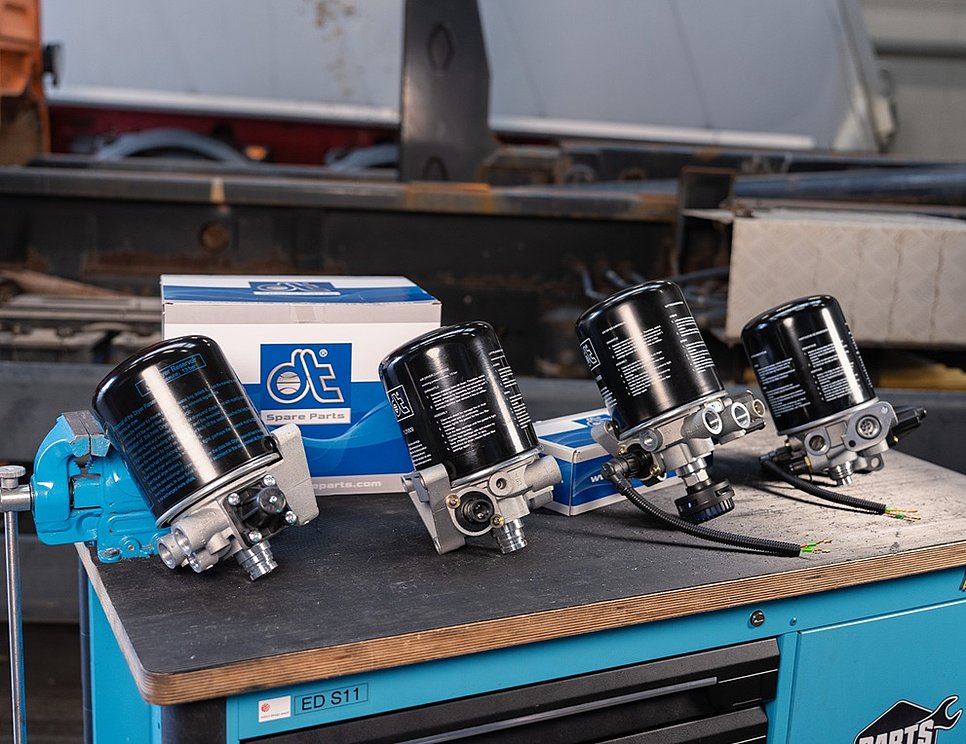
Air dryers play a key role in the compressed air system of commercial vehicles. They remove moisture, oil and other contaminants from the compressed air generated by the compressor, protecting the downstream components of the system from contamination and potential damage.
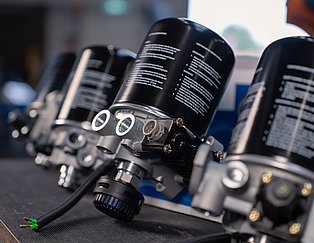
In the latest PS Tips video, Parts Specialist Lars explains how the air dryer works and highlights the key points to bear in mind during maintenance and diagnostics. With over 100 spare parts, DT Spare Parts offers a wide range of air dryer components, including air dryer cartridges, heating elements and repair kits. Suitable items are available on the Diesel Technic Partner Portal for brands including DAF, Iveco, MAN, Mercedes-Benz, Scania and Volvo. An important point to note when selecting parts: Orders should always be based on the relevant part number to ensure that the technical specifications are suitable for the application.
The warm compressed air produced by the compressor is first directed to the air dryer. There, it cools down, allowing any moisture to condense. The swirling of the air removes initial contaminants before the compressed air flows through the air dryer cartridge and then enters the compressed air system. At the same time, the regeneration tank is filled.
As soon as the specified cut-off pressure is reached, the regeneration phase begins. During this process, dry air flows from the regeneration vessel back through the air dryer, absorbing any remaining moisture and fine contaminants. These are then discharged from the system. “Regeneration repeatedly removes moisture and fine contaminants from the cartridge. This extends their lifespan and ensures that they can perform their function reliably,” explains Lars.
Many models also feature a heating element which, at low temperatures, prevents any remaining moisture from freezing and impairing performance.
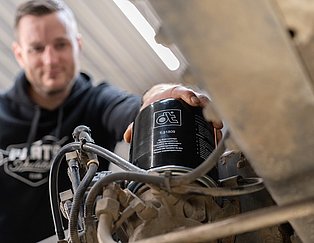
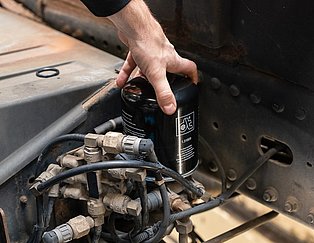
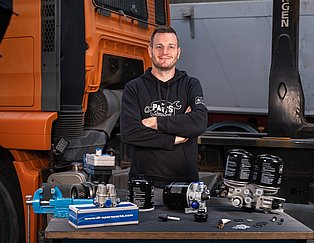
In the PS Tips video, Lars also demonstrates how to check that the air dryer is working properly. The air receiver can provide an important clue: the bleed valves on it can be used to check whether there is any water in the compressed air system. “If the air dryer is working correctly, there should be neither water nor contaminants in the downstream compressed air system,” says Lars.
As part of the Diesel Technic Quality System, the air dryers are also tested for functionality under simulated vehicle conditions. This allows, for example, the activation and deactivation pressures as well as the regeneration phase to be monitored. The pressure build-up is used to determine when the air dryer switches to the regeneration phase and subsequently resumes the delivery phase. The characteristic hissing sound indicates the regeneration phase. “The measured values should always be compared with the relevant manufacturer’s specifications. This allows you to determine whether the air dryer is operating within the intended pressure range,” explains Lars. In addition, the heating element is examined more closely and checked for proper function. The air dryers from DT Spare Parts are already pre-set. The adjustment screw is sealed and should not be adjusted independently, as the activation and deactivation pressures are set to defined values. “Under no circumstances should you attempt to readjust the setting screw yourself,” emphasises Lars.
When troubleshooting, it is also worth taking a close look for any contamination on the air inlet side of the air dryer. If there are unusually large amounts of oil present there, this may, for example, indicate a problem in the compressor area. “In this case, it’s not just the air dryer that should be examined. It’s important to check the compressor as well and find out where the contaminants are coming from,” explains Lars. Furthermore, cloth rags should not be used for cleaning, as fibres can come loose and impair the system’s operation.
Another important point is the regular maintenance of the air dryer cartridge. The prescribed maintenance intervals should be adhered to so that moisture and contaminants continue to be reliably filtered out of the compressed air. Lars has a simple practical tip for this: “It’s best to write the date directly onto the new air dryer cartridge. That way, you can always see when it was fitted and keep a better track of when it needs replacing.”
If you have any technical questions about Diesel Technic products and services, our Parts Specialists are happy to help via their HelpDesk and offer the right support: helpdesk.parts-specialists.com.
The Parts Specialists are now also available in the PS App. There you can send enquiries directly to our team of experts – quickly and easily with your smartphone in your pocket.